PlumbingKashmir10 October 20265 min read
Frozen water pipes in Kashmir: prevention starts with the route.
Plan winter plumbing in Kashmir by identifying exposed pipes, improving routing, specifying insulation and freeze protection, and preparing for vacant periods.
The strongest freeze-protection plan starts with where the pipes run and what keeps that space warm. Insulating a pipe is useful, but insulation slows heat loss; it does not create heat or guarantee protection through a long freezing period without a heat source.
For a Kashmir home, guesthouse or seasonal property, winter plumbing should cover normal occupation, power interruptions and any period when the building is empty. The right plan depends on those conditions rather than a single product wrapped around every pipe.
Map the vulnerable route
Trace the water route from supply and storage to the rooms it serves. Identify sections in roofs, outside walls, unheated stores, exposed ducts, courtyards and outdoor connections. Include valves and joints, not only straight pipe lengths.
Note where freezing has occurred previously and whether both hot and cold services are affected. A hot-water line also becomes cold when it is not used. Ask the plumber to identify hidden routes from drawings or investigation rather than guessing from visible pipework.
The American Red Cross frozen-pipe guidance identifies exposed and unheated locations as common risk areas. Its central prevention advice includes protecting or relocating vulnerable pipework; local system design must account for your property and winter conditions.
Move vulnerable services into protected space where practical
In a new build or major renovation, ask whether supply pipes can run within the heated boundary. A route that is convenient for installation may be difficult to protect after ceilings and walls are closed.
Coordinate the pipe route with insulation and airtightness. A service chase should not accidentally become an open path for cold outside air. Where the pipe crosses the enclosure, detail the penetration and preserve the intended insulation line.
If rerouting is impractical, document the retained risk and the protection proposed. “Insulate all pipes” is not a complete answer if the route remains outdoors and no heat is available during prolonged cold.
Specify insulation as a system
Ask for an insulation specification suitable for the pipe, location and exposure. Include valves, fittings, supports and joints. Outdoor insulation also needs appropriate weather and mechanical protection; gaps or damaged coverings can undermine the intended result.
Provide access to components that require inspection. Wrapping an isolation valve so thoroughly that staff cannot find or operate it creates an ownership problem even if the pipe itself is protected.
For hot-water distribution, coordinate insulation with the wider energy and circulation design. The hotel hot-water guide explains why plant selection and pipe routes should be reviewed together.
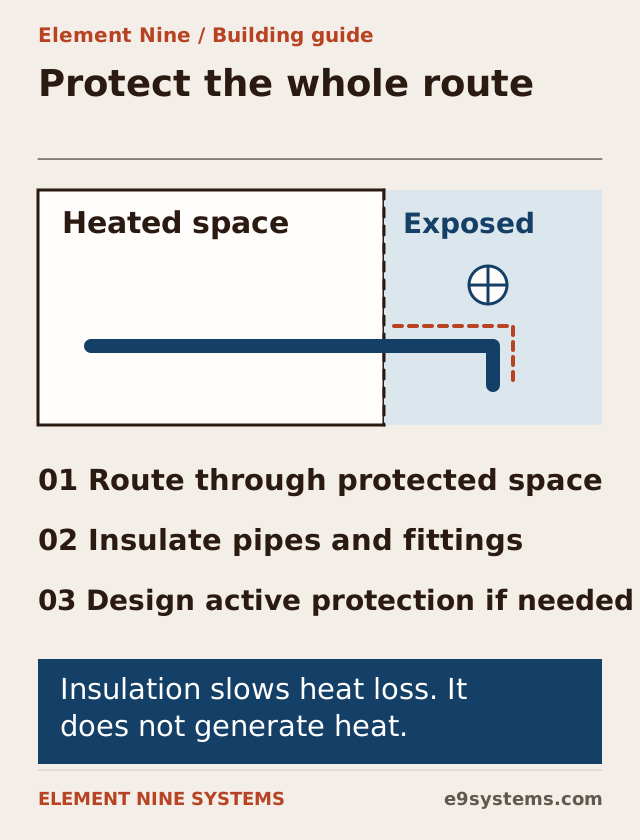
Design powered protection and outage response together
Where a designer specifies a heating cable or other powered protection, confirm its compatibility with the pipe material and the manufacturer’s installation instructions. The specification should include electrical protection, controls, sensor position and maintenance requirements.
Powered protection depends on power. Ask what happens if electricity is unavailable, whether vulnerable sections can be isolated or drained, and who is responsible for acting. A system with no understood response to an outage is incomplete.
Do not improvise with open flames, unsuitable heating devices or unapproved chemicals. The Red Cross specifically warns against using open-flame devices to thaw pipes. If a frozen section is inaccessible or a leak is suspected, contact a qualified plumber.
Plan for an empty house or closed guesthouse
A property that is occupied throughout winter and one closed for weeks have different needs. Tell the designer which scenario applies before the installation is finalised.
For seasonal closure, request a written procedure identifying which systems remain active, which sections are isolated, and which can be drained according to equipment instructions. Tanks, heaters, pumps, appliances and trapped low points need consideration; shutting one valve does not establish that the entire system is empty.
For buildings that remain heated, agree monitoring and response arrangements. A neighbour checking the property needs clear information about the main isolation point and who to contact, rather than being expected to troubleshoot plant.
Make maintenance access part of the installation
Label isolation valves and retain an as-built route drawing. Ask for access panels where joints, controls or drain points need attention. Photograph routes before they are concealed.
Include a preseason check of exposed coverings, controls, valves and previously affected locations. A protection plan should be easy to inspect without demolishing finished work each year.
For a new project, this is a coordination issue for plumbing, insulation, electrical work and finishes. Our construction checklist shows where those decisions belong in the sequence.
What if a tap suddenly has little or no flow in cold weather?
Freezing is one possibility, but supply interruption or another fault can also cause it. Check whether other outlets are affected and contact the appropriate service provider or plumber. If there is leakage, use the known isolation point if it is safe to do so; keep clear of water near electrical equipment.
Is thicker pipe insulation enough?
It can improve protection, but the outcome depends on the surrounding temperature, time, available heat and complete installation. Ask for a plan based on the route and operating conditions, including outages.
Give the plumber the winter-use brief
Share the location, exposed or unheated spaces, previous freeze points, water-storage arrangement, outage experience and periods of vacancy. Element Nine Systems can discuss plumbing design and coordination with the building’s insulation and heating plan so vulnerable routes are addressed before they are hidden.