HeatingGeneral guide10 October 20265 min read
Heat pump or electric heating: compare running costs with clear maths.
Compare heat-pump and resistance-heating costs using delivered heat, effective seasonal performance, tariffs, auxiliary use and clearly stated assumptions.
Compare the cost of delivering the same useful heat under the same operating assumptions. Comparing two appliances’ electrical ratings does not tell you the seasonal cost of keeping a building comfortable. Demand, source performance, tariff and auxiliary consumption all matter.
A transparent calculation is more useful than a promised percentage saving. Here is how to read one, with an illustrative example you can replace with project-specific data.
Separate heat demand from electrical input
The building requires useful heat to offset losses and reach the chosen temperatures. Equipment uses electricity or fuel to provide that heat. Those quantities are related, but they are not always equal.
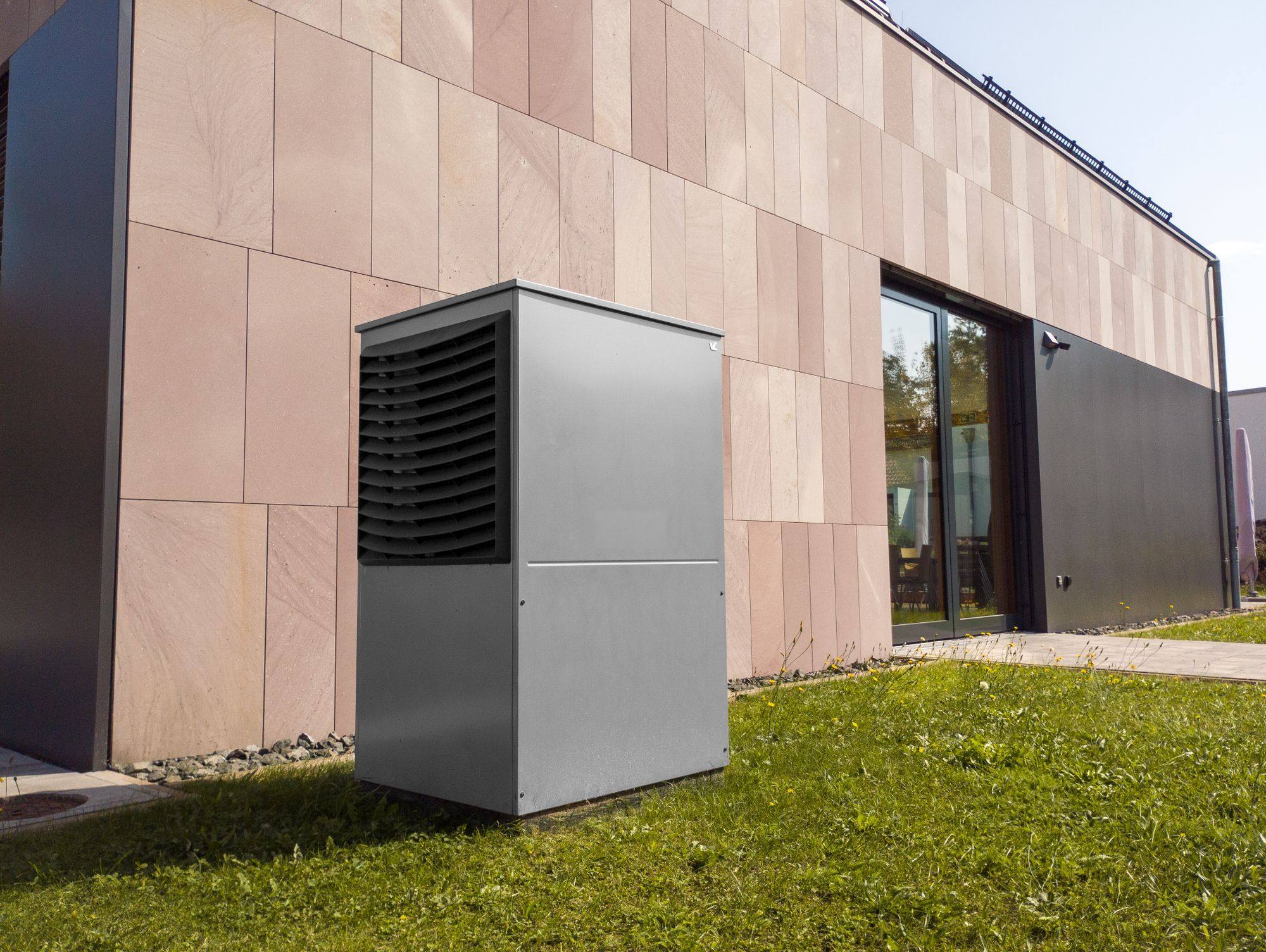
Direct electrical resistance heating converts electricity to heat at the point of use. A heat pump moves heat from a source and uses electricity to do so. The US Department of Energy explains that heat-pump principle in its Energy Saver guide.
The comparison still needs the same boundary. If one option includes fans, circulation, defrost and auxiliary heating while another omits them, the apparent result is not like-for-like.
Understand COP and seasonal performance
COP is delivered heat divided by electrical input at stated conditions. A test-point COP of 3 means three units of delivered heat for one unit of electricity at that test point. It does not establish a full winter result.
For a period comparison, use an effective performance ratio based on total delivered heat and total relevant electrical input for that period. Do not simply average a few brochure COP values. Outdoor temperature, output temperature, controls, cycling and auxiliary use can change the result.
A declared seasonal rating also has a test method and climate basis. Ask whether it represents your intended installation or is being used only as one reference for a project estimate.
Work through an explicit example
Assume an imaginary building needs 1,000 kWh of useful heat during a chosen period. Assume a flat electricity price of ₹8 per kWh for this arithmetic example. This is not a Kashmir tariff, a quote or an estimate of your home’s demand. Fixed charges and other costs are excluded.
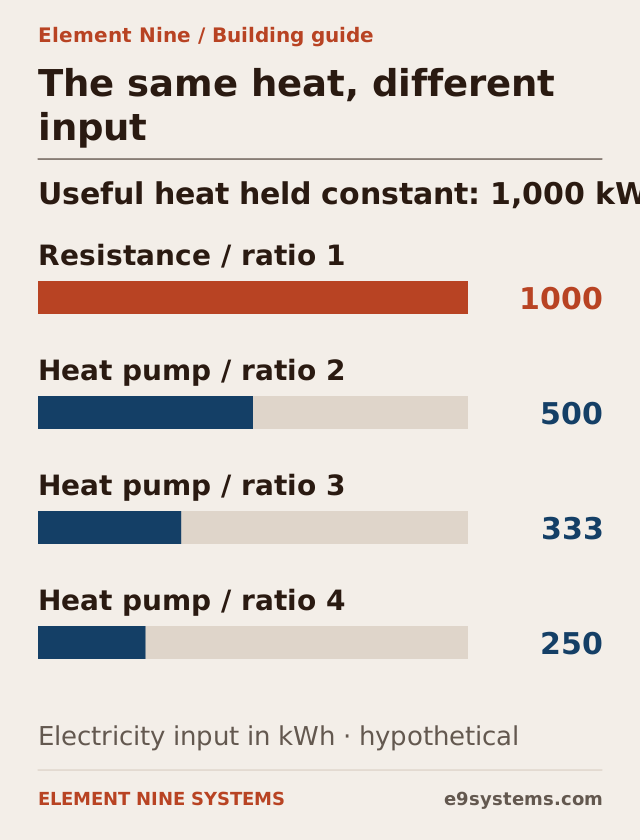
For the comparison, assume resistance heat delivers that useful heat from 1,000 kWh of electricity at the stated point-of-use boundary. Then examine several assumed effective heat-pump ratios:
| Scenario | Useful heat | Electricity | Example cost |
|---|---|---|---|
| Resistance heating | 1,000 kWh | 1,000 kWh | ₹8,000 |
| Heat pump, ratio 2 | 1,000 kWh | 500 kWh | ₹4,000 |
| Heat pump, ratio 3 | 1,000 kWh | About 333 kWh | About ₹2,667 |
| Heat pump, ratio 4 | 1,000 kWh | 250 kWh | ₹2,000 |
The calculation is electricity = useful heat ÷ effective performance ratio, followed by energy cost = electricity × applicable unit price. The table demonstrates sensitivity to performance; it does not promise that a particular unit will achieve any row.
If your tariff has slabs, time bands or demand charges, a single flat rate may not represent the marginal cost. Use the actual tariff and the expected consumption pattern for a meaningful estimate.
Check what is inside the heat-pump ratio
Ask whether the proposed estimate includes circulation pumps, indoor and outdoor fans where applicable, defrost-related use, controls and supplementary heaters. Identify whether domestic hot water is included or a separate duty.
If auxiliary electricity is added outside the quoted performance ratio, add it explicitly without double counting. The installer should explain the system boundary in plain terms.
For Kashmir or another cold region, use low-temperature capacity and efficiency data for the selected equipment, including the required water temperature where relevant. Our cold-weather heat-pump guide explains which figures to request.
Hold comfort and occupancy constant
A room heated for two hours and a whole house heated all day do not receive the same service. Comparing their bills without that difference can misrepresent the technology.
Record heated rooms, indoor temperatures, schedules and hot-water duties. If the new system encourages more rooms to be heated or longer use, distinguish improved comfort from efficiency savings.
Envelope improvements can reduce useful heat demand for both options. Show that effect separately from the heat-source comparison so the same insulation saving is not credited twice.
Include installation and ownership in the decision
Running energy is only part of cost. Compare equipment, distribution, electrical upgrades, installation, maintenance, parts and eventual replacement. Include work to make existing emitters compatible with a proposed water temperature.
A small occasionally used room may justify a different investment from a continuously occupied house. A longer-lived heating decision should consider the anticipated use rather than assume every owner has the same budget or operating pattern.
Do not present a payback period without the additional installed cost and annual saving assumptions. If either is uncertain, show the range and what would change it.
Is a COP of 4 the same as one-quarter of my current bill?
No. It is a heat-to-input ratio at particular conditions. Your bill may include other uses, different operating hours and charges. A period comparison needs the actual heating demand and complete system performance.
Does underfloor heating itself make the heat pump efficient?
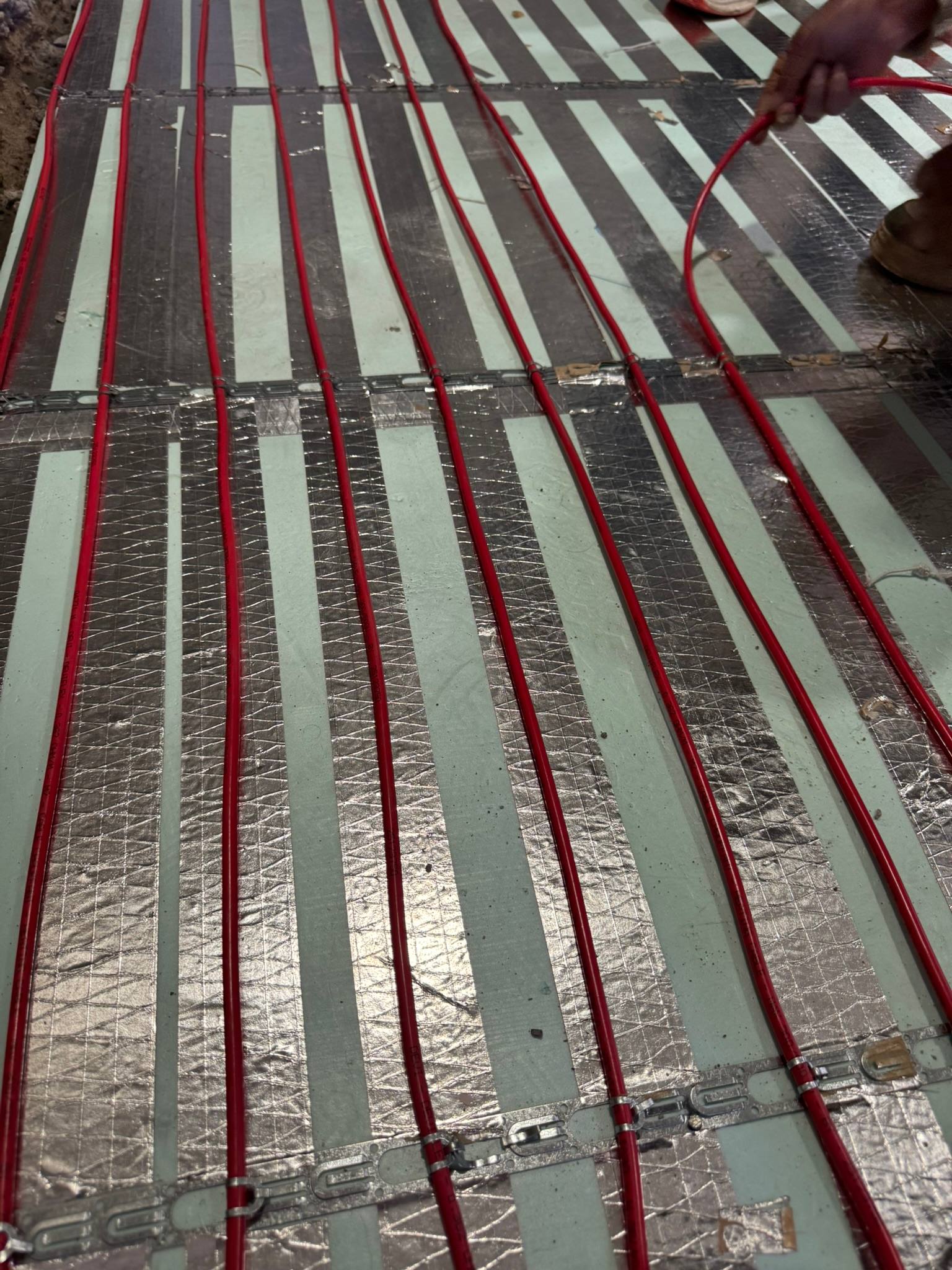
It is a heat-delivery system. Its design may allow suitable water temperatures, but room demand, floor limits, controls and source performance still need checking. Avoid attributing the heat source’s performance to the pipework alone.
Ask for an estimate you can interrogate
Request the demand, weather and use assumptions, tariff basis, performance data, auxiliary allowances and installed scope. Element Nine Systems can discuss heat-pump options with the heat-loss assessment and distribution design, so the comparison supports a purchasing decision rather than a headline saving.