Project planningKashmir15 September 20264 min read
Chillai Kalan, by the numbers
What thirty years of IMD climate data for Srinagar tells us about how Kashmiri houses should be designed.
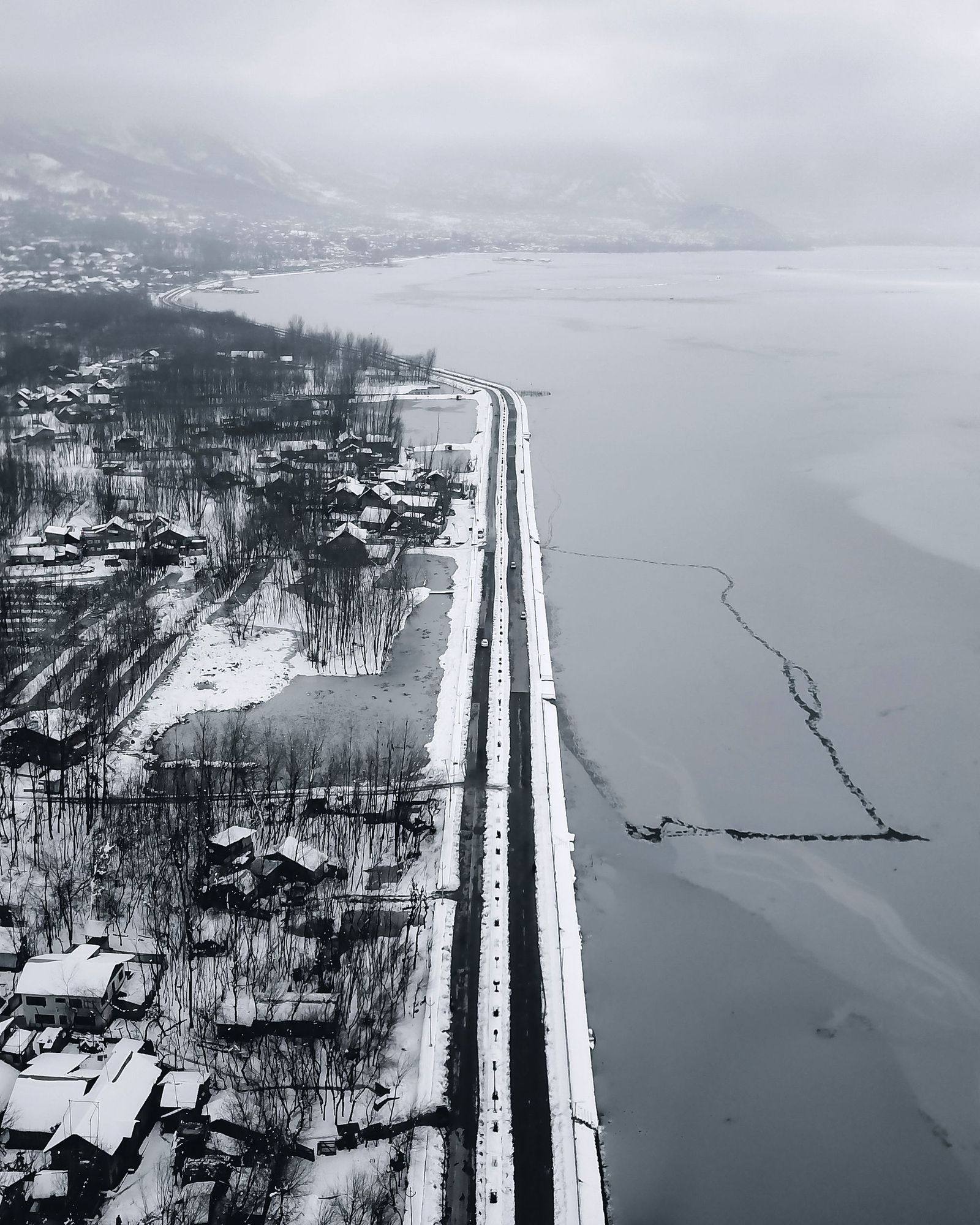
Everyone in Kashmir knows Chillai Kalan: the forty days of hardest winter from 21 December. It is followed by Chillai Khurd, twenty days, and Chillai Bachha, ten days. Together they are seventy days that test every house in the Valley.
Here is what the data says, and what it means for design.
The figures
The India Meteorological Department publishes climatological tables for Srinagar. For 1991 to 2020:
- The mean daily minimum in January is −1.9 °C. December is −1.6 °C.
- The mean daily maximum in January is 7.1 °C.
- Even in March, nights average just 4.3 °C.
These are averages. Individual nights in Chillai Kalan go much colder, and towns at higher altitude, and Ladakh, are colder still.
The number that matters: 23 degrees
A comfortable room is about 21 °C. On an average January night in Srinagar, that is about 23 degrees warmer than outside. On a properly cold night it can be 30 degrees or more.
That temperature difference drives everything. Heat always flows from warm to cold, and the bigger the difference, the faster it flows. A house in Kashmir has to hold back that difference, every night, for weeks.
Designing for the cold nights, not the average
A heating system sized for an average day will struggle on the coldest nights, exactly when you need it most. That is why we size heating from a heat-loss calculation at a winter design temperature well below the January average, room by room.
It is also why the order of work matters:
- Reduce the heat loss first: insulation, airtightness and good windows.
- Then size the heating to what is left.
Done the other way round, you pay for a larger heating system and then pay again to run it.
Long winters change the maths
Because Kashmiri winters are long, small savings per night add up. A wall that loses a few watts less per square metre does it for every hour of seventy cold days. Over the life of a house, the envelope is usually the best investment you can make.
Source: India Meteorological Department, climatological table for Srinagar, 1991–2020.