WindowsKashmir10 October 20265 min read
Double or triple glazing for Kashmir? Compare the whole window.
Choose double or triple glazing for a Kashmir home using whole-window performance, orientation, frame quality, installation details and room comfort.
Choose the window with the right verified performance and installation detail, rather than choosing by pane count alone. Triple glazing can improve thermal performance, but a well-specified double-glazed window and a poorly specified triple-glazed window are not equivalent products with one extra pane between them.
For a Kashmir home, the decision is room-specific. A shaded bedroom, a large living-room opening and a small sunny kitchen window can present different comfort, daylight and overheating questions. Start with those requirements, then compare the complete products.
What changes when another pane is added?
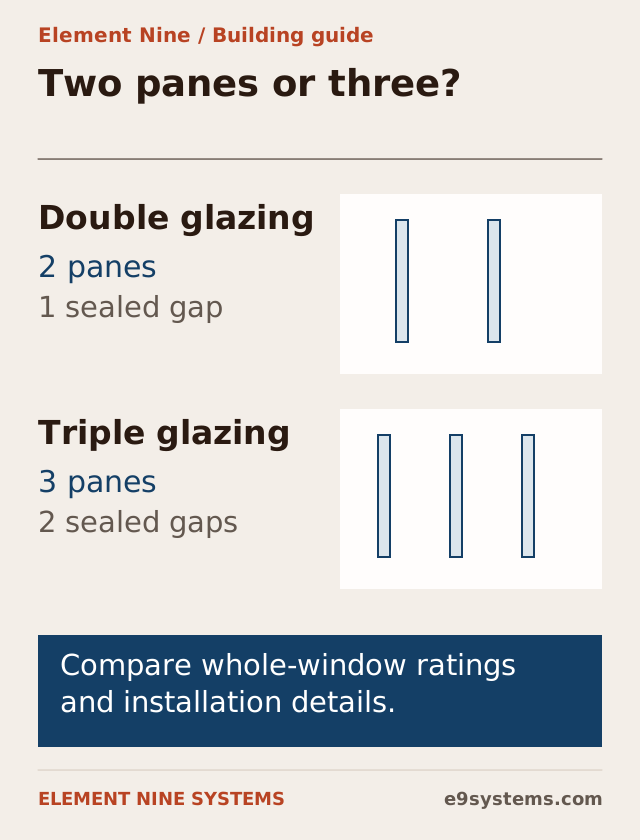
An insulated glazing unit combines panes, sealed cavities, spacers and sometimes low-emissivity coatings and insulating gas. The extra pane in triple glazing creates another cavity, but the thermal result depends on the full construction.
The US Department of Energy’s window guidance explains how frames, low-emissivity coatings and insulated glazing influence heat transfer. These are product features to check in a specification, not proof that every window sold under one category performs the same way.
Ask for the exact glazing build-up offered, not the performance of a different premium configuration pictured in a brochure. Frame size, opening arrangement and glass choice should match the quotation.
Compare whole-window performance
The glass is only part of a window. Frames, edges and opening sections affect the complete assembly. Request a whole-window U-value or U-factor, the test or calculation basis, and the units used. A lower value means less heat transfer under the stated conditions.
Do not compare a centre-of-glass figure with a whole-window figure. Do not compare numbers expressed in different measurement units as though they were identical. Where a supplier quotes separate glass and frame values, ask for the complete window result for the proposed configuration.
Our guide to U-values and low-E glass explains the terms to request in writing.
Choose by room and orientation
Use a window schedule that records the following for every opening:
| Room question | Why it changes the choice |
|---|---|
| Is the room used overnight? | Comfort near the glass matters during the coldest occupied hours |
| Is the opening large relative to the room? | A large glazed area can influence room heat demand and surface comfort |
| Does it receive useful winter sun? | Solar gain can help, but shading and warmer-season use still matter |
| Does the room already overheat in sunlight? | More solar gain is not automatically desirable |
| Is outside noise a priority? | Ask for acoustic data for the exact assembly, separately from thermal data |
| Is the frame or surrounding wall damp? | Investigate seals, water entry, insulation and humidity before replacement |
In a shaded room with a large glass area, a stronger thermal specification may deserve a larger share of the budget. In a smaller opening, improving the installation joint or adjacent wall might be the more pressing issue. A calculation helps establish the trade-off.
Understand solar gain and daylight
Solar heat gain coefficient, or an equivalent declared solar factor, describes how much solar energy passes through the product. Visible transmittance describes daylight transmission. Neither is the same as U-value.
The National Fenestration Rating Council’s ratings information separates these measures. Its American labels use their own units and certification framework; the useful buying principle is to compare the relevant measures on a consistent basis.
Ask whether the proposed coatings reduce light or change the appearance of the glass. View a sample if possible. A window intended to retain winter warmth must also suit views, daylight, shading and summer room use.
Treat the installation joint as part of the product
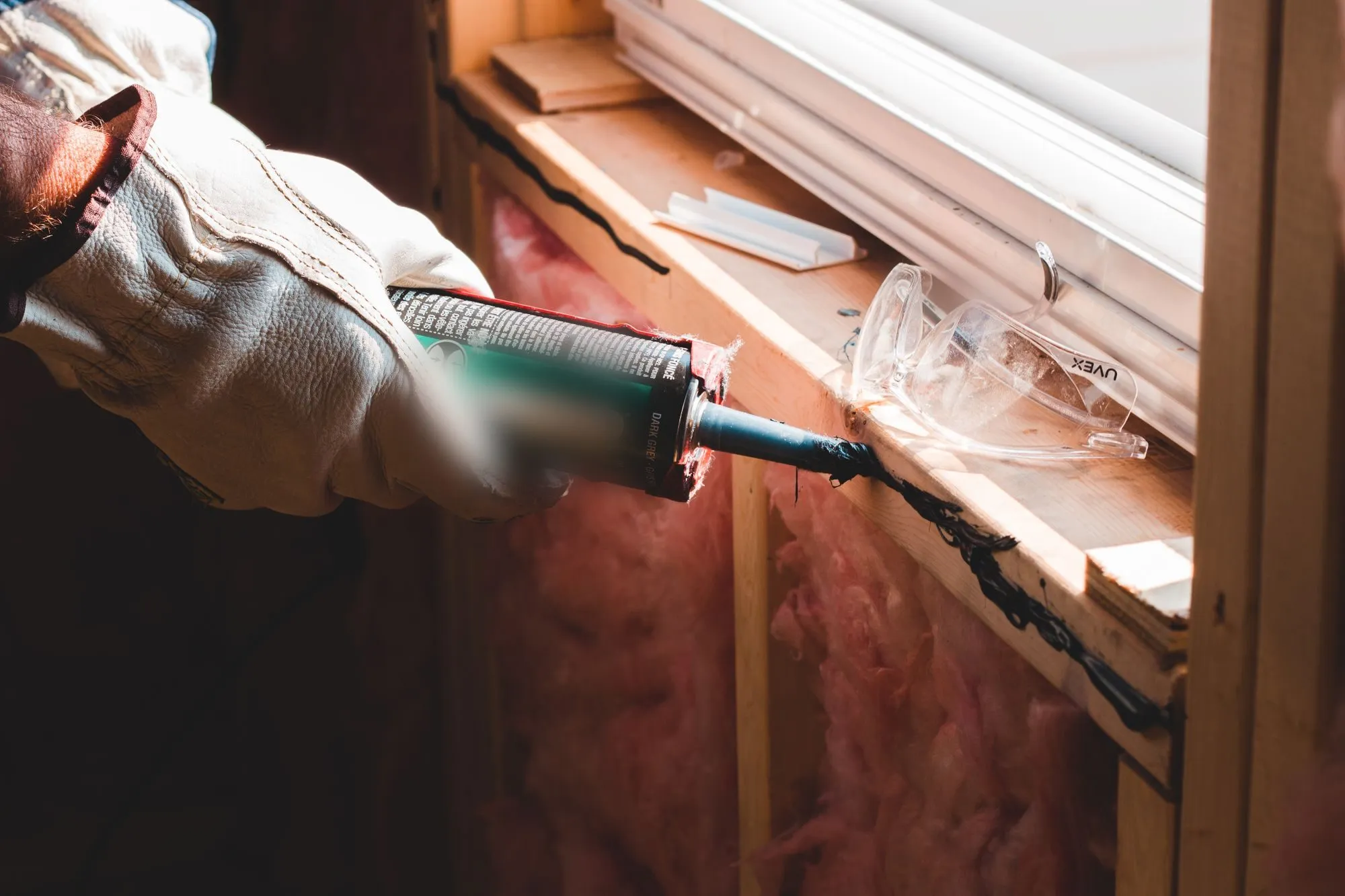
A good frame can still leave a draught at the frame-to-wall joint. The installation proposal should explain fixing, perimeter insulation, internal air sealing, external weather protection and drainage at the sill.
If wall insulation is planned later, decide where the window sits relative to that future layer. Check reveal treatment, sill projection and whether the old opening needs repair before installation. These are reasons to discuss windows together with envelope insulation.
Ask who removes the existing frame, disposes of it, repairs the opening and restores internal finishes. A supply-only price and a finished installation price should not be treated as competing quotations for the same work.
Check practical ownership details
Triple-glazed units are typically heavier than comparable double-glazed units because they contain more glass. Confirm that hinges, opening sizes, frame design and installation arrangements suit the specified product. Ask what replacement glass and hardware are available locally, and who handles adjustment or warranty enquiries.
The warranty should identify which parts it covers: sealed units, frame finish, hardware and installation are separate questions. An attractive warranty duration does not tell you what service is included.
Will triple glazing stop condensation completely?
No product can guarantee that in every indoor condition. Condensation also depends on humidity, surface temperatures, edge and frame performance, and ventilation. Investigate the building conditions rather than treating pane count as a cure.
Is triple glazing necessary throughout the house?
Not necessarily. A mixed schedule can be sensible if the performance and comfort priorities are understood. Keep installation quality consistent even where glazing specifications differ.
Ask for a window schedule, not a blanket answer
Send the room names, opening dimensions, direction each window faces, photographs and any damp or draught history. State whether the project is a replacement or a new build. Element Nine Systems can discuss a room-by-room window specification and the junction details that connect it to the rest of the building.