HeatingKashmir10 October 20266 min read
Electric hamam in Kashmir: a practical guide for your home
Planning an electric hamam in Kashmir? Understand floor insulation, heating mats, controls, electricity use and installation before choosing a system.

An electric hamam brings warmth through the floor using heating cables or mats, rather than a fire beneath the stone. A thermostat controls the system. The floor construction, insulation and heat lost from the room determine how well it works and what it costs to use.
In Kashmir you will see both spellings, electric hamam and electric hammam. They usually describe electric underfloor heating installed for the familiar comfort of a warm room and floor. The name alone does not tell you the heating product, floor build-up or scope of installation.
If you are planning a room in Srinagar, Budgam, Baramulla or elsewhere in the Valley, start with the space you want to warm and the way you use it. A family sitting room, a bathroom and a whole house need different checks.
What is beneath an electric hamam floor?
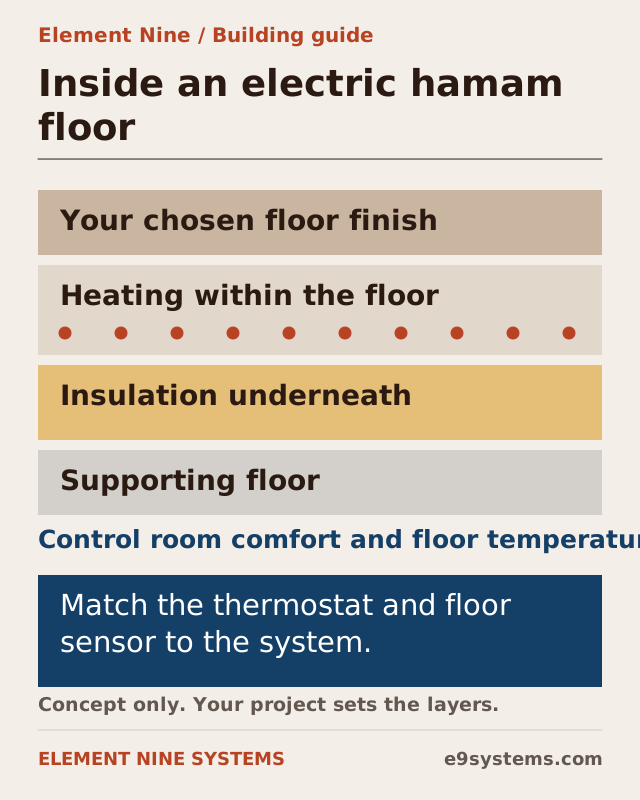
The heating element sits within a compatible layer beneath the finished surface. Depending on the selected system, that might be a heating mat embedded in a suitable bedding or a cable arrangement within a designed floor construction. Insulation below helps limit heat travelling into the supporting floor.
The floor finish, bedding, heating, insulation and supporting structure have to be considered together. A thin heating mat does not mean the complete floor rises by only the thickness of that mat: insulation, levelling and the chosen tiles or stone also take space.
Before ordering, ask for a drawing or written description of the complete build-up. For a renovation, it should show how the new floor meets doors, stairs, adjoining rooms and any bathroom drainage.
Is it for a warm floor or the whole room?
These are different goals. Comfort heating takes the chill off a floor while another system may provide the room’s heating. A system intended to heat the whole room has to cover that room’s heat loss within the usable heated area and the permitted floor temperature.
For example, a large sitting room with exposed walls, a cold roof and leaky windows may lose more heat than a suitable floor system can provide. Raising the floor setting is not a substitute for checking the building. Improving insulation and draught control can be part of making the room comfortable.
Describe whether you want a comfortable floor, primary room heating or selected warm areas. That answer changes the specification and prevents two suppliers quoting for different jobs.
Which rooms and floor finishes suit it?
Electric systems are often considered for individual rooms, bathrooms and renovations, where separate controls and a suitable floor construction can be useful. Whole-house heating deserves a comparison with warm-water underfloor heating, including the heat source, electricity supply and anticipated use.
Tile and stone can work well with floor heating, but the complete assembly still needs to be compatible. Timber, laminate, vinyl and SPC products require the flooring manufacturer’s approval, installation conditions and temperature limits. The label “SPC” alone is not approval for an electric hamam.
Tell the designer about fixed cabinets, permanent furniture and any thick rugs. They affect the available heating area and can affect heat release. The selected heating product’s instructions determine where it may be installed.
How much electricity will it use?
There is no reliable single daily bill for every electric hamam in Kashmir. The connected heating load is only one part of the answer. Room heat loss, insulation, outdoor conditions, thermostat setting, use schedule and electricity tariff all matter.
A simple way to understand the units is:
Energy used in a day = heating load in kilowatts × equivalent hours at full power.
For illustration, a 1.5 kW system using the equivalent of four hours at full power consumes six units, or 6 kWh. Multiply those six units by your applicable electricity tariff to understand the energy charge for that example. It is not a prediction for your house. A thermostat may cycle the system, so hours switched on are not necessarily hours drawing full power.
Ask an installer to explain the assumptions behind any running-cost estimate. A room kept warm all day has a different pattern from a bathroom used briefly in the morning. An electric hamam also depends on electricity being available; discuss outages and how the household will manage them before committing.
What should installation include?
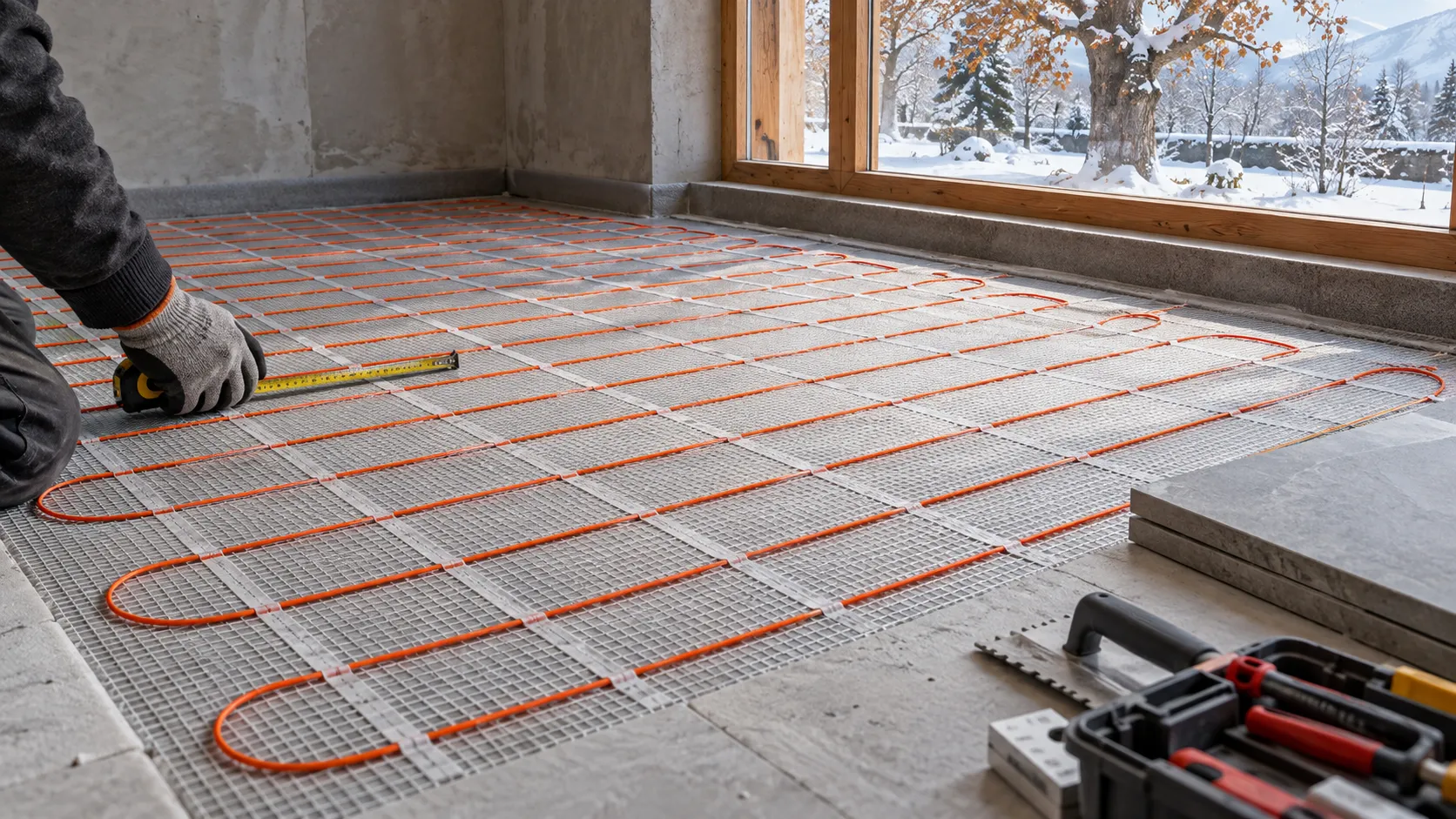
Good installation starts before the cable is laid. The base should be suitable, the floor levels agreed, and the insulation and moisture protection coordinated with the room. Heating is laid to the approved layout, avoiding prohibited areas and following the product’s spacing and covering requirements.
The electrical supply and protective devices need checking by a qualified electrician. Ask how earthing, circuit loading and the required protection will be provided. Wet-room installations also need an appropriate heating system and coordination with bathroom waterproofing.
Testing should be recorded at the stages specified by the product instructions, including before the heating is covered. Keep the layout and test records: once the floor is finished, they are useful when planning future work or investigating a fault. Heating should be started only after the relevant bedding or screed has cured and the specified commissioning conditions are met.
What controls and handover do you need?
Controls should suit the room and floor construction. Depending on the product and finish, the thermostat may use an air sensor, floor sensor or both. A compatible floor sensor and correctly set limits help control the heated surface within the specified conditions.
At handover, ask to be shown how to set the room, schedule heating, use any setback mode and recognise a fault indication. You should receive product details, installation and electrical test records, the heating layout and the applicable warranty terms.
The useful next step is a room-specific discussion. Share your drawings or dimensions, location and flooring choice, then compare a complete scope rather than a heating mat alone. Our electric hamam installer checklist gives you questions to use before accepting a quotation.